 REMOTE FIRST
Skills, Growth Plans and Career Paths
Why traditional CVs are no longer enough, how to spot real skills in daily work, and how to turn them into growth plans and career paths that keep top performers engaged in a company withuot borders.
1. Why CVs are no longer enough
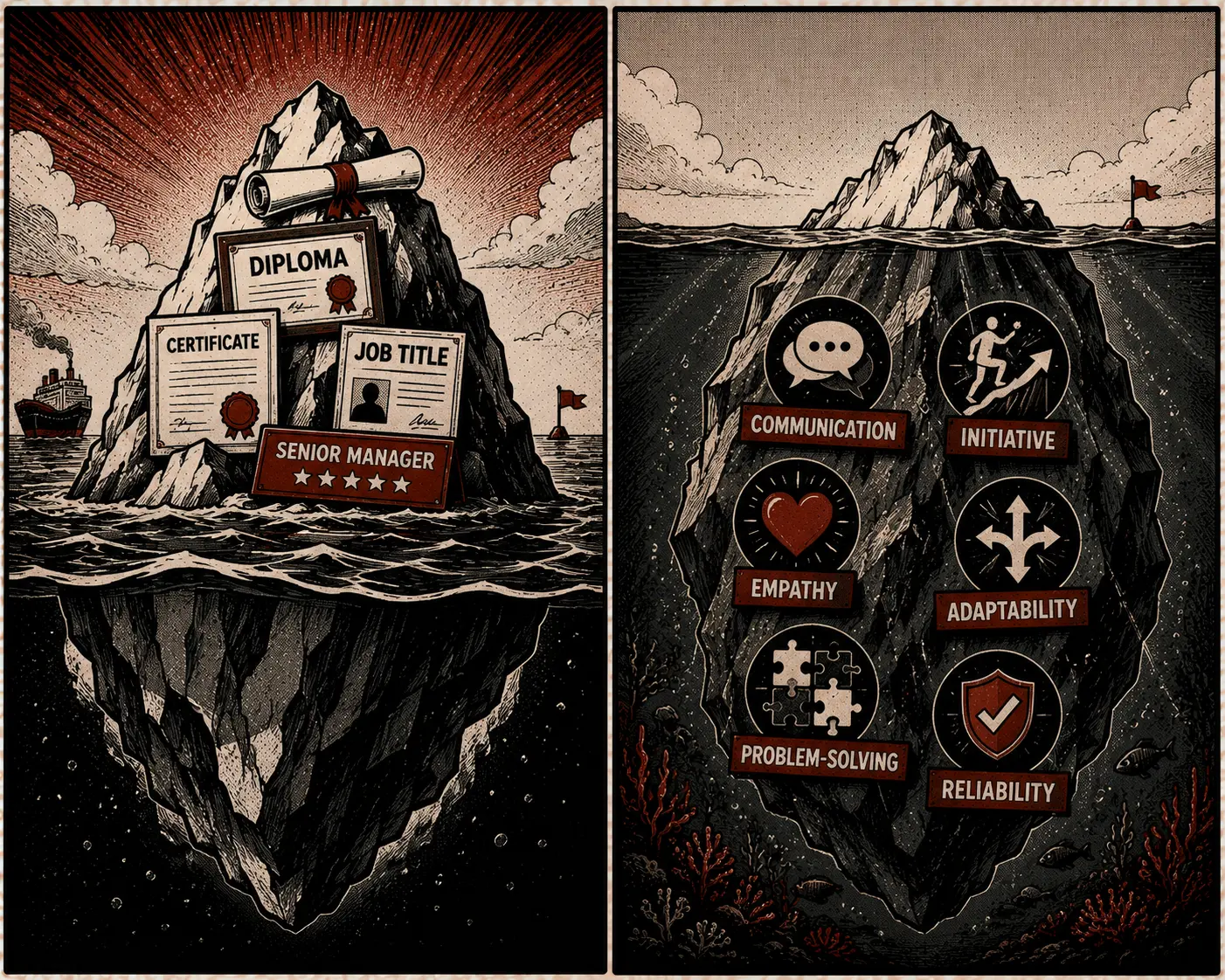
In the last few years the way companies evaluate and grow collaborators has changed. The traditional focus on formal education and static competencies is shifting toward skills that are observable in daily work, which means the most reliable information no longer comes from a diploma or a job title but from how someone actually behaves in real situations.
This shift follows the speed of digital business. Tools and best practices evolve so quickly that roles change faster than any job description can follow, so a static list of past experiences tells you where someone has been, not how they will perform in a moving environment.
It is increasingly common to see CVs full of courses, degrees and internships that look impressive on paper, while in daily work the person collaborates little and rarely shares suggestions or feedback. Teamwork cannot be added as a line on a CV: it becomes visible in how someone communicates, supports colleagues and contributes to collective results over time.
A varied CV can still tell you something valuable, because moving across roles often builds adaptability and a broader understanding of how businesses work. It is worth exploring the story behind those moves: was the person looking for growth that was not available, or is there a pattern that might repeat?
In practice, most of the evaluation now happens through behaviors: how someone runs a call, gives and receives feedback, manages a project asynchronously, or supports a colleague in another time zone. KPIs and hard skills still matter and results still have to be achieved, but many candidates share the same courses and technical skills, and only a few can truly work well remotely.
Reflective questions
- In your current evaluation process, where are you still relying too much on CVs, titles and certificates instead of observable behaviors?
- Which concrete signals in remote collaboration, in meetings and in written messages, should you start paying more attention to?
- What can you change in your interviews to test behavior rather than confirm a CV?
2. Hidden potential: non-linear paths
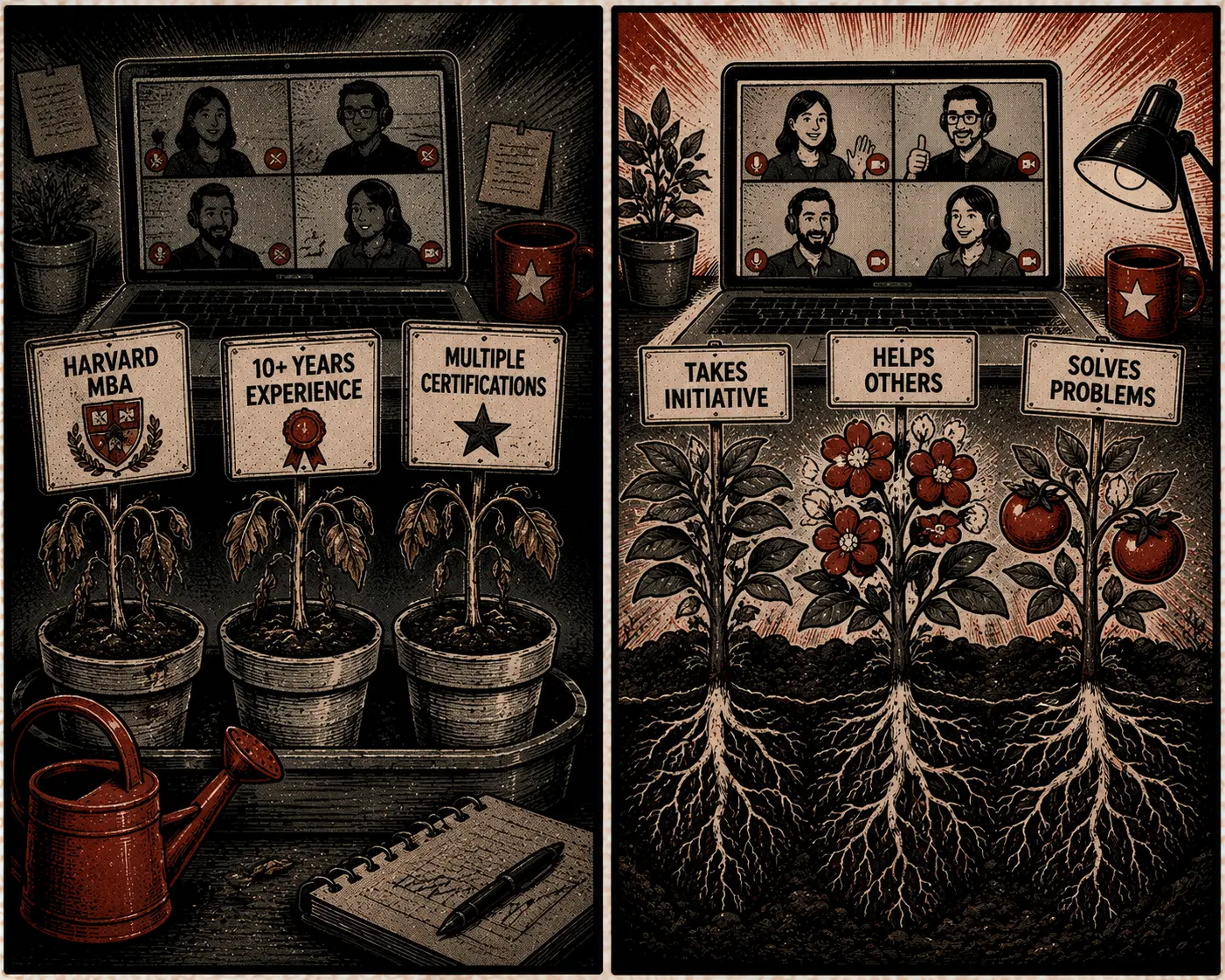
Many talented people build their abilities through self-learning, side projects or non-linear careers. They may not have the perfect CV, but they bring a mix of technical, relational and problem-solving skills that only emerges when they are given space to contribute. Self-directed learning tends to develop proactiveness, curiosity and a genuine love for learning, without external pressure. If you keep looking only at diplomas, you miss a large pool of potential and frustrate people who are ready to grow.
One of the best video editors we have worked with had never completed a video editing course: he had spent years playing online games and had even built a game himself, an experience that requires creativity, persistence and collaboration. After a few days he was already proposing concrete improvements to our content flow.
One of the marketing assistants I have worked with had no formal background in marketing. As the oldest of five children she had organized home, meals and school routines for years, which built the organizational skills and empathy that make someone effective at planning campaigns and holding timelines in a remote team.
In both cases the useful information appeared in the first weeks of work, not on the CV. Screening on formal background is fast and feels safe, but it filters out exactly the people who learn quickly and stay curious, before anyone has seen them work. Non-linear profiles simply need a different entry path: a short paid test, a real task instead of a hypothetical one, and a manager who takes notes on behavior.
Reflective questions
- Who on your team today has skills you discovered only by accident, and what would have helped you see them earlier?
- Where in your hiring funnel are non-linear profiles filtered out before anyone can assess what they actually do?
- What small test or short project could you offer to a self-taught candidate to let them show their real level?
3. Competencies vs skills
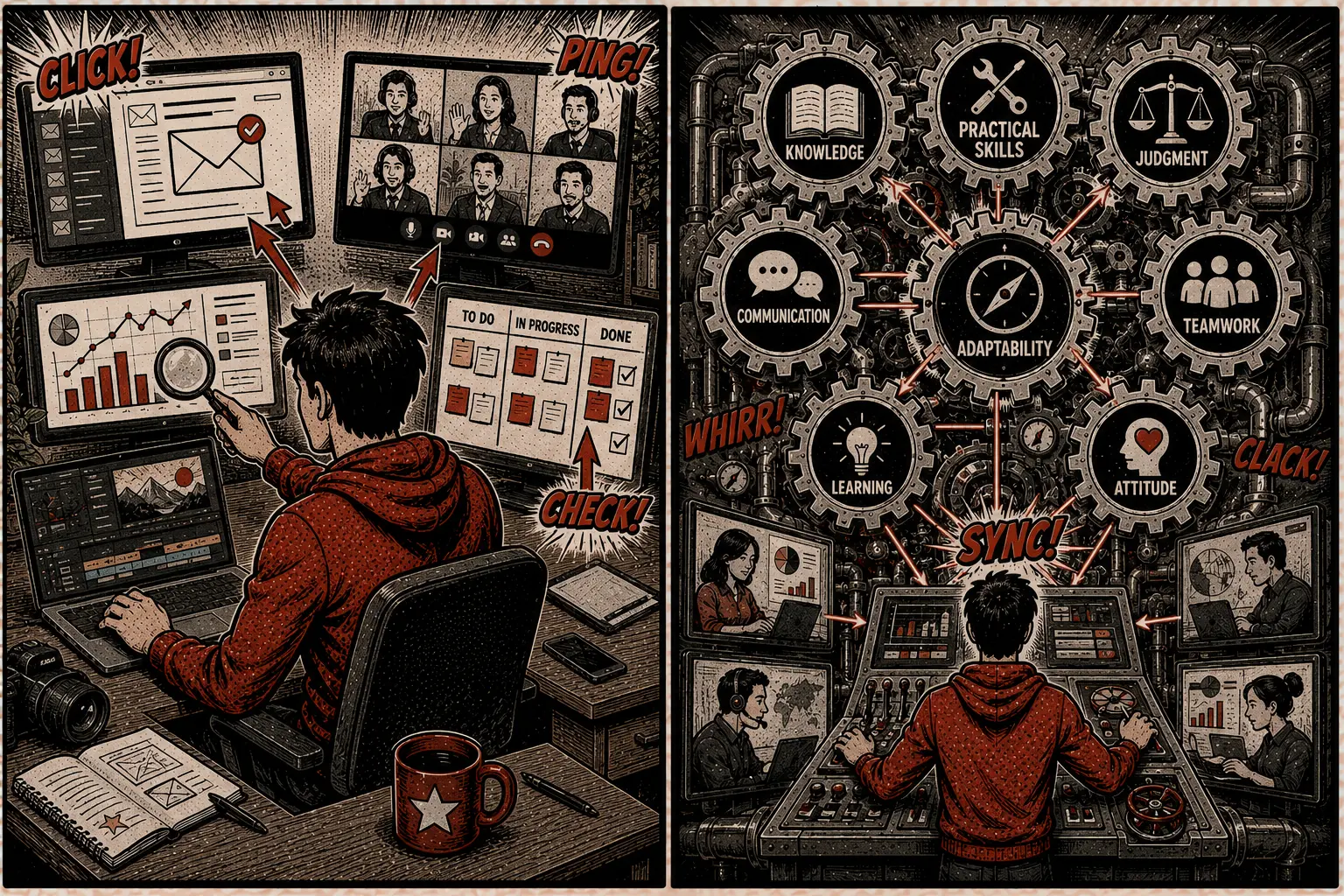
A skill is the ability to perform a specific task or behavior well, in a way that can be observed and improved. Writing clear emails, running an effective meeting, reading a data report, editing a video or organizing a project are all skills, and they show up in concrete actions: how you structure information, how you listen and respond, how you solve the problem in front of you.
A simple test tells the two apart. Take any line in your evaluation form and ask whether you could describe what it looks like on a Tuesday afternoon. "Strategic mindset" fails the test; "reframes a client request into the underlying business problem before proposing a solution" passes it. Everything that passes belongs in your evaluation; everything that fails belongs in the job description.
A competence is a broader combination of knowledge, skills and attitudes in a certain area. Digital marketing competence can include copywriting, basic design, data analysis and campaign setup, plus knowledge of tools and attitudes such as curiosity and customer focus. Leadership competence can include giving feedback, delegating and facilitating meetings, along with responsibility and empathy. Competencies live in frameworks and job descriptions; skills are the visible pieces that tell you whether the competence is really there.
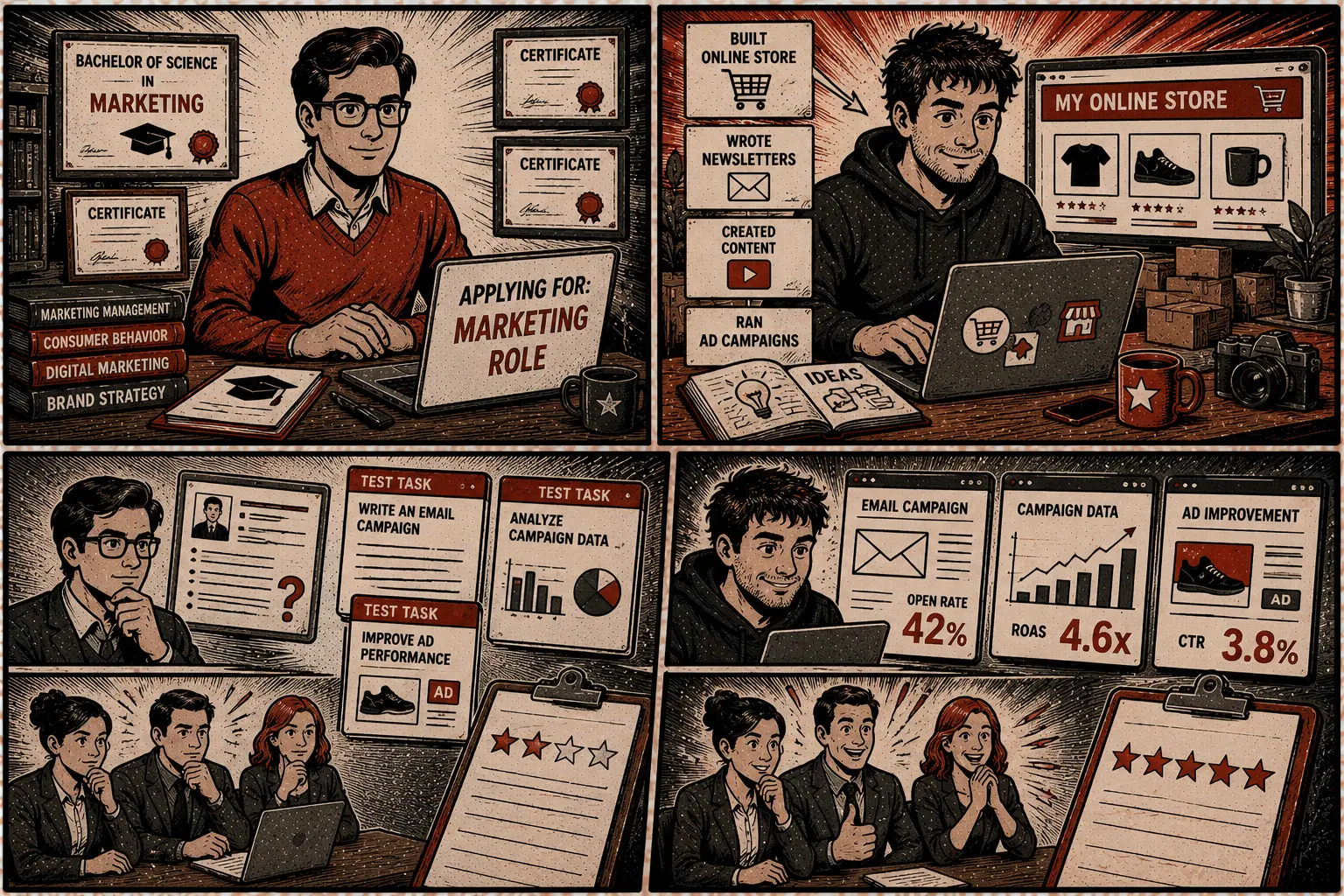
Imagine two candidates for a remote marketing role. The first has a degree and several certificates, which suggests formal competence. The second has built and run a small online store, written newsletters, created content and tested ads. In interviews and test tasks the second may show stronger skills in writing, experimenting and reading campaign data, even with a weaker CV. Focusing on skills is what allows you to see that difference.
Reflective questions
- Are you rewarding formal competencies more than concrete skills, and where do you see it most clearly?
- For your two most critical roles, could you write down today the five skills that actually predict success?
- What is one change you can make in the next month, in interviews or 1:1s, to observe skills rather than infer them?
4. Core skills for remote careers

Remote collaboration requires a specific set of skills that behave differently when the team is distributed across screens and time zones. These are the ones worth defining, observing and training deliberately.
- Time management: planning and prioritizing so that quality work is delivered on time without burning out. It shows in protected focus time, delays communicated early, and no last-minute emergencies created for others. Burnout is a constant risk in remote work, so managing time also means knowing when to step away from the screen.
- Active listening: paying full attention, asking clarifying questions and confirming understanding before responding. In remote meetings it looks like taking notes, summarizing what was heard and repeating the important details back, which prevents the misunderstandings that multiply when body language is missing.
- Feedback provision: giving and receiving feedback clearly and respectfully, focused on behaviors and results rather than on the person. Feedback should be grounded in data and specific examples, and received as professional, not personal: it would have been given to anyone in the same position.
- Empathy: understanding other people's emotions, perspectives and constraints. In remote work, where stress and loneliness run higher, it means noticing changes in tone or behavior, asking how someone is, and adapting expectations. Contrary to what many assume, empathy can be trained with practical exercises.
- Respect: treating everyone with consideration regardless of role, location, salary or background. It shows in punctuality, inclusive language, not interrupting, and never putting a colleague on the spot in a public call. If the only available reply in a public moment is a negative one, it is better not to reply at all.
- Responsibility: owning your tasks, decisions and impact even when nobody is watching. With less direct supervision it becomes visible in met deadlines, risks flagged early and mistakes corrected without being chased.
- Critical thinking: analyzing information and questioning assumptions instead of following routines. Any report is technically doable with AI or a spreadsheet; what matters is reading it with critical eyes, looking beyond the predefined KPIs and noticing what else the data is saying.
- Emotional intelligence: self-awareness, self-regulation, motivation and social skill. It appears in how a person reacts under pressure, handles conflict in chats or calls, and adapts their communication style to different people.
One dynamic deserves special attention. In remote meetings, stronger personalities and more senior people easily dominate the conversation, while others speak less or stay silent even when they have useful ideas. Leave space on purpose and invite the quieter voices: most of the time they hold the most interesting ideas and simply need to be asked.
Reflective questions
- Are deadlines on your team consistently met without last-minute rushes, and what does the pattern tell you about how work is structured?
- When did you last give feedback grounded in specific data and examples rather than impressions?
- In your last three meetings, who spoke least, and what would it take to make space for them next time?
5. Self-advocacy and asking questions
Self-advocacy is a key remote skill. Collaborators often feel alone behind a screen, especially in large or highly technical meetings. Self-advocacy means speaking up respectfully: asking for clarification, explaining a point of view, and sharing needs or ideas without waiting to be invited to talk.
Asking questions instead of making assumptions prevents wasted work. A simple "Can you confirm I understood correctly?" or "Is this the priority for this week?" can save hours spent in the wrong direction. Feedback works the same way: it is the tool that verifies whether your perception matches reality.
There is a difference between a useful question and a complaint. A complaint describes a problem and leaves it on someone else's desk; a useful question states what the person already understood and proposes the decision needed: "I read the brief as prioritizing retention over acquisition, so I would start with the email flow. Confirm or correct me before I build it." Ten seconds more to write, a day of misdirected work saved.
In an asynchronous company, self-advocacy is mostly written, so a short weekly update works well: what I shipped, what I learned, what I am blocked on, what I need from you. It gives the manager evidence for evaluations and the collaborator a record of their own growth. This behavior has to be modeled from the top: if a question is ever answered with impatience, the whole team learns that asking is expensive and starts guessing instead.
Reflective questions
- Do the quieter people on your team feel safe enough to ask a question in front of everyone, and how do you know?
- How often does work get redone because an assumption was never checked, and where does that usually start?
- What could you change in your meeting format to make asking questions the normal behavior rather than the exception?
6. Who evaluates skills
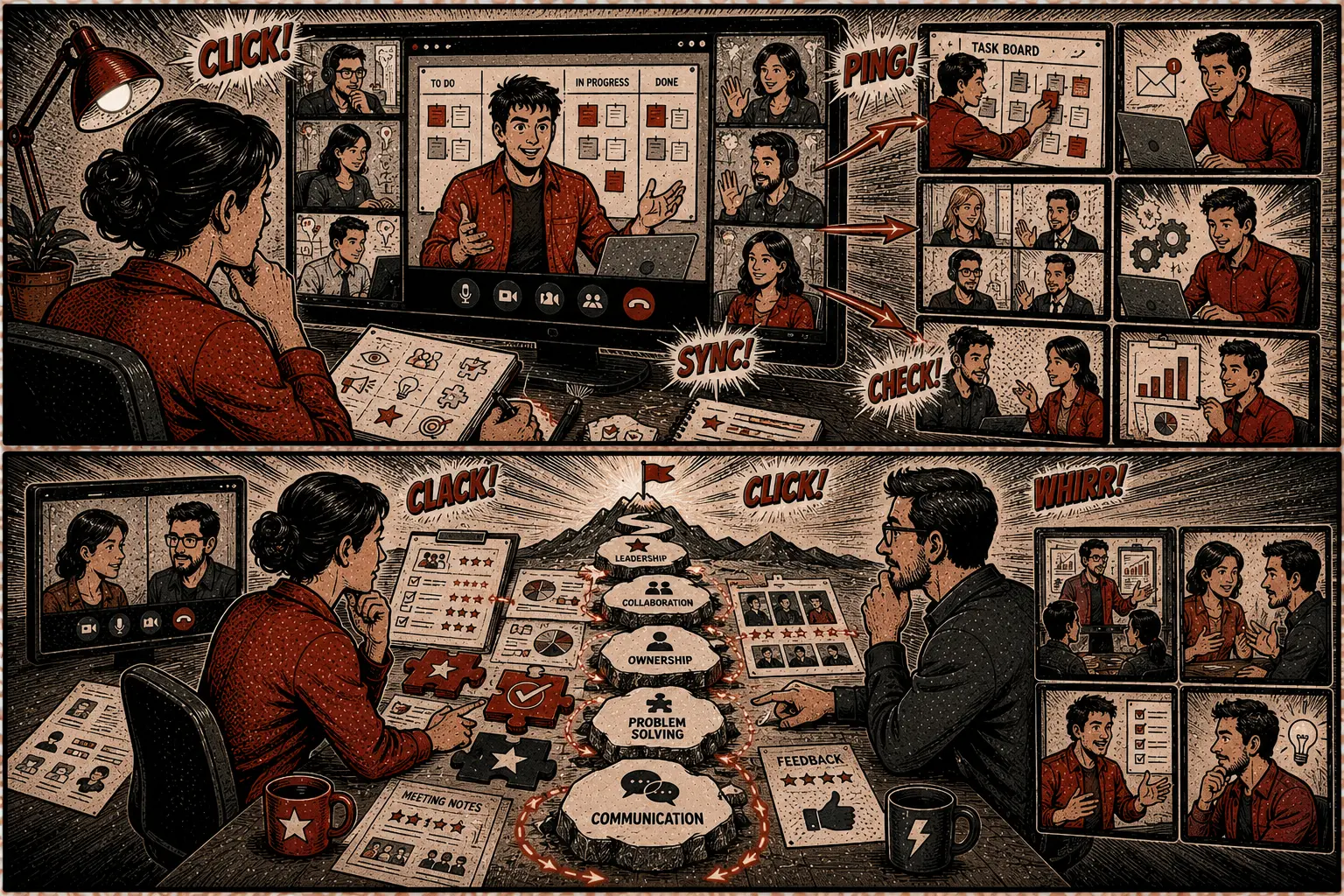
Assessing the skills of digital workers is a shared responsibility between the direct manager and the People Manager. As the direct manager, working closely with the collaborator, you notice strengths that could be useful elsewhere: problem-solving, initiative, calm under pressure. The People Manager supports the process from the first interview onward, using structured meetings, targeted questions and small role plays to surface skills that daily tasks never reveal.
The two roles need different lenses on purpose. The manager sees performance in context, the People Manager sees patterns across the company and keeps the criteria consistent, so that the same word means the same thing for every collaborator. When both perspectives are documented, an evaluation stops being one person's opinion.
In practice the split works best when each side knows what it owns. The manager brings evidence: what happened, when, in which project, with what result. The People Manager brings calibration: how that behavior compares with the same behavior in other teams. Disagreements are useful, because the productive question is not who is right but which evidence each of them is looking at; if it cannot be resolved with examples, the criteria are too vague and need rewriting.
Reflective questions
- Who is formally accountable for assessing skills on your team, and is that clear to the collaborators themselves?
- Where do you and the People Manager disagree most often, and what would resolve it: better criteria or better evidence?
- What are you currently writing down about each person's skills, and would it be usable six months from now?
7. Role plays and cross-department scenarios
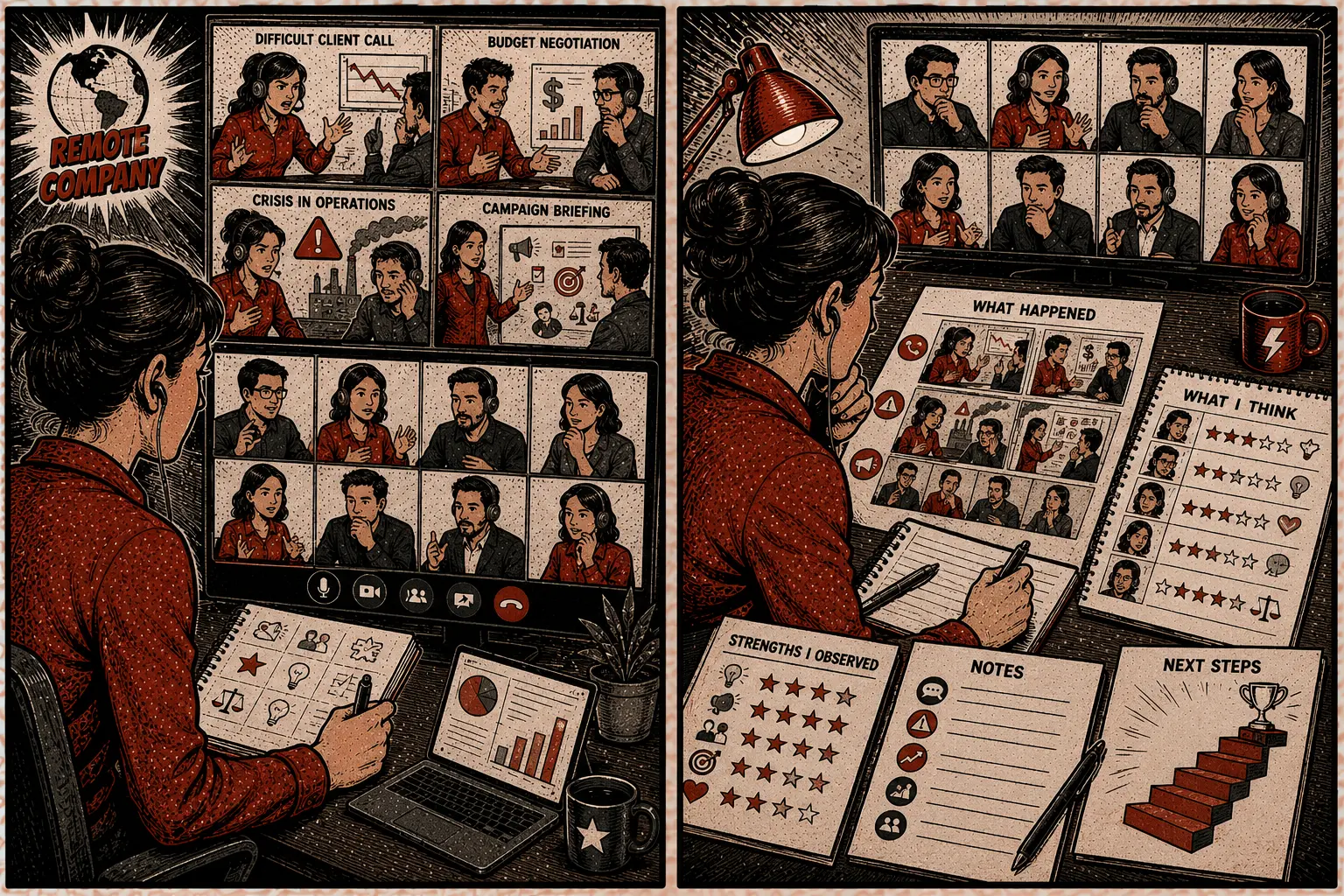
Role plays are a practical way to evaluate skills that routine tasks never expose. By bringing together people from different departments and designing scenarios, you can invite collaborators to temporarily act in roles outside their job: Manager, Finance Specialist, Creative Strategist. Stepping outside the comfort zone shows how someone thinks and reacts when the context changes.
To be effective, scenarios should stay close to real company situations: a difficult client call, a budget negotiation, an operations crisis, a briefing where priorities conflict. Explain the context, the objective and who plays which role before starting, and record the session so details missed live can be reviewed later.
What you observe is revealing. Some people show leadership by structuring the conversation and involving others, some show analytical thinking by asking precise questions and connecting data, others reveal facilitation skills by mediating conflict and making sure everyone is heard. This is often how you find the next team leader or key assistant, hidden inside another role.
The setup can stay light: thirty to forty minutes, with five to frame the scenario, twenty for the simulation and the rest for feedback. Decide in advance the two or three skills you want to observe, and keep the feedback descriptive: what you saw, what effect it had, what you would try differently.
Reflective questions
- When did you last run a role play or cross-department simulation, and what did it show you that daily work had not?
- Which specific skills do you want to observe in your next scenario, and how will you document what you see?
- What follow-up do you owe the people who showed unexpected potential: feedback, new responsibilities, mentoring?
8. Skills matrices and observable criteria
To analyze skills systematically, start from a shared list of roles and the skills each one requires. For every skill, write a short description of what it means in that specific context, then derive simple criteria that make it observable. These definitions should be aligned across the leadership team, so that empathy, ownership, problem-solving and leadership mean the same thing to everyone.
Once the framework is clear, you assess whether each collaborator already demonstrates those skills in daily work, while the People Manager shares and explains the expectations directly with them. Where a skill is missing or underdeveloped, the next step is a training path, a learning opportunity or a stretch assignment that lets the person practice in a safe but challenging context.
Three challenges come with this work and should not be underestimated:
- A shared taxonomy: without common definitions, two managers rate the same behavior differently and the framework loses meaning.
- Translating intangible skills into observable behaviors, for example "asks clarifying questions before acting" or "summarizes decisions at the end of a meeting".
- Keeping the framework alive: it should be refined over time with feedback from managers and collaborators, not frozen in a document nobody reopens.
Reflective questions
- Do you have a written list of key skills and observable criteria for each role, and do you use it consistently?
- Which skill on your list is still described in words too vague to evaluate, and how would you rewrite it as a behavior?
- In the last three months, how many learning opportunities did you create for the skills you identified as priorities?
9. From skills to KPIs and career steps
Skills become useful for growth only when they connect to concrete career paths. Clarify which skills are essential to move from specialist to team leader, or from assistant to project manager, and what kind of evidence shows readiness for the next step. Without that link, an evaluation is a photograph; with it, it becomes a direction.
A practical example, for the role of Creative Strategist. The People Manager prepares the evaluation format and the list of core skills, such as creative thinking, strategic vision, collaboration, communication and analytical thinking, with examples of observable behaviors for each. The direct manager completes it with ratings and concrete examples from daily work. Then the collaborator, the manager and the People Manager review it together, decide which skill needs to improve, and co-create a plan with clear actions, timelines and support.
The step most companies skip is turning the skill into something countable. A skill described as a behavior can almost always be paired with an indicator: "communicates asynchronously" becomes "project updates published weekly without being asked, in the agreed place"; "owns her projects" becomes "risks flagged before the deadline, not after it". The indicator is not the goal, it is the evidence that the behavior is stable rather than occasional.
The difference between a vague indicator and a usable one is decisive. "Be more proactive" cannot be measured or coached; "propose at least one process improvement per month and follow it through to a decision" can be discussed honestly even when the answer is no. Once indicators exist, the career step becomes explicit: two consecutive quarters of stable evidence at the next level, plus an actual need in the organization.
Reflective questions
- For each role on your team, is the path to the next step written down, or does it exist only in your head?
- What evidence would convince you that someone is ready for more responsibility, and does your team know what it is?
- When you close an evaluation, do you leave with a written plan of actions, timeline and support, or with general intentions?
10. Challenges, games and rotating responsibility
Challenges are another way to reveal skills that stay invisible in asynchronous work. When a new team leader is needed, ask different team members, one at a time, to plan and run the weekly meeting, rotating the responsibility over several weeks. You quickly see who can engage others, keep the discussion on track, manage time and create a good atmosphere without your support.
Almost any task a manager does can be delegated temporarily to test both skill and willingness. People who lead a meeting become aware of their own words and tone; people asked to evaluate a colleague become noticeably more careful and analytical. The best signal is when someone comes back with suggestions on how to improve the task itself, without being asked.
Choosing the right challenge matters as much as running it. A good one is real, bounded in time, visible to others and reversible: running the weekly meeting for a month, owning the onboarding of the next hire, leading a small cross-team fix. Say clearly that it is a test, with a start and an end date, and relieve something else while it runs, because a challenge added on top of a full workload measures endurance, not skill.
Games, challenges and quizzes during meetings make this exploration lighter than a formal evaluation. A short problem-solving challenge on a real company issue, or a quiz where each person shares a hidden skill, often surfaces more than a questionnaire. Write down what you observe: over a few months these notes become the most credible evidence you have about who is ready for more.
Reflective questions
- Which challenges or games have you used in the last three months, and what did you learn about each person?
- Which of your own recurring tasks could you delegate for two weeks as a real test of skill and willingness?
- How could you redesign your regular meetings so more people get a safe chance to lead?
11. Mentoring, courses and continuous learning
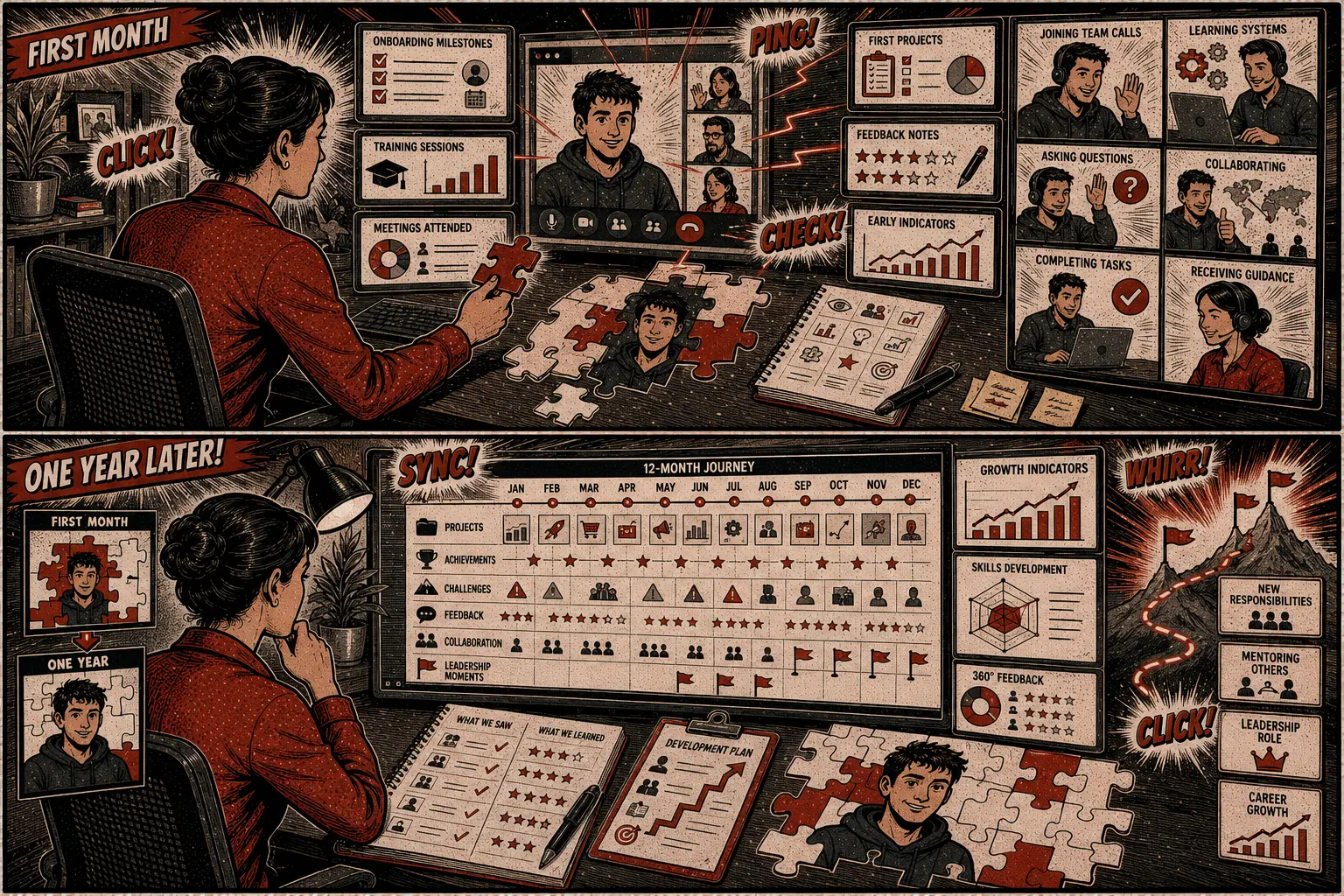
Mentorship plays a key role in growth. The mentor does not have to be the direct manager, but should be someone who follows the collaborator over time, close enough to daily challenges to notice difficulties early, give guidance and share relevant information with the People Manager. It only works when the mentor genuinely believes the person is worth investing in, rather than treating mentoring as an assigned task.
Curiosity has to be kept alive. Collaborators who attend a course can be invited to present what they learned to the team: it reinforces the knowledge and reveals who engaged out of real curiosity. A simple process keeps this consistent: the People Manager tracks the courses a collaborator wants or a manager suggests, the company buys them and sets a realistic deadline, usually within a month.
Understanding motivation matters even more in remote companies. Talented people are ambitious and curious, and they get bored quickly when nothing new appears on the horizon. Anticipate it and plan growth opportunities before they start looking elsewhere: retention is not only about salary, it is about making people feel that their growth matters.
Reflective questions
- Does each collaborator have a mentor, or are you hoping someone senior will naturally step in?
- Which of your most talented people has not had a new challenge or a real growth conversation in the last 60 days?
- What would it take to formalize learning follow-up: courses tracked, a completion deadline, a short summary shared with the team?
12. Individual Development Plans
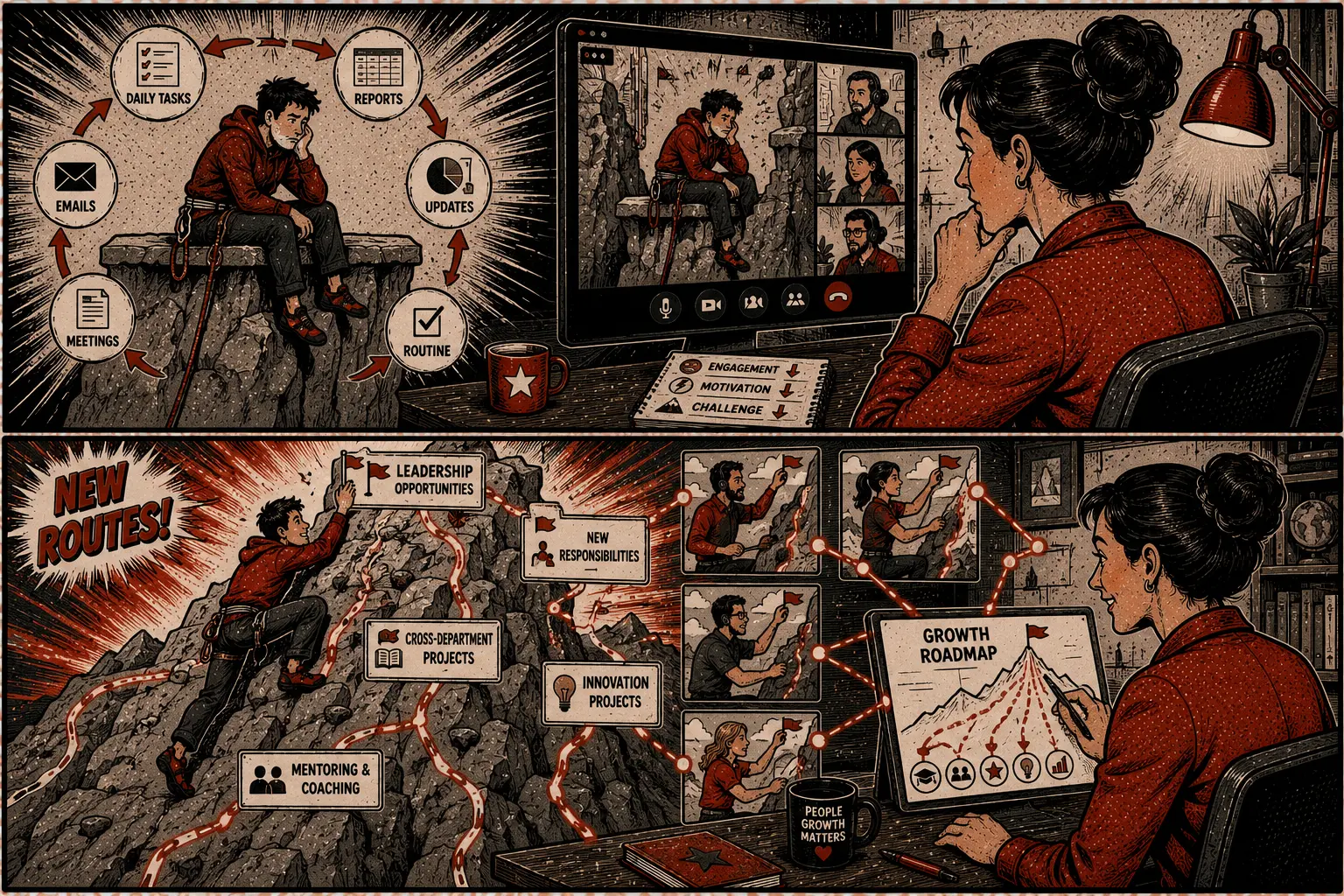
After assessing skills and potential, the next step is a structured growth plan. You and the People Manager align on the next steps for each collaborator, making sure they reflect both company needs and personal aspirations. Growth does not always mean changing role: it can mean new skills, new projects, wider responsibilities or deeper expertise in the current position.
To work, a plan has to be specific, measurable and time-bound. Goals like "improve communication" are impossible to track and easy to deprioritize. Breaking an objective into concrete actions, with owners and deadlines, turns an aspiration into a process. The Individual Development Plan (IDP) is the tool for that: it states the skill to develop, the objectives, the actions, the people involved, the timeline and the indicators of success.
Take a plan focused on speaking in public. The objective is a clearer and more engaging message; the actions are short presentations, one recorded session to review voice and posture, and structured feedback after each round.
| Skill | Objective | Action | Who | When | Success measure |
|---|---|---|---|---|---|
| Oral communication in public | Improve structure and clarity of the message | 10–15 minute presentations in an academic / professional context | Me + Team | Feb 2026 | 2 or more presentations delivered |
| Oral communication in public | Improve structure and clarity of the message | Record one presentation to analyze voice, posture, and eye contact | Me | March 2026 | Each video shows an improvement over the previous one |
| Oral communication in public | Improve structure and clarity of the message | Request structured feedback after each session | Me + co-worker | April 2026 | Each new piece of feedback is more favorable than the previous one |
Alice's story shows how the pieces fit together. After two years as a customer service agent she stood out: responsible, detail-oriented, deeply knowledgeable about the product, with natural empathy and a real understanding of what customers needed. When a vacancy opened on the product team, her manager and the People Manager ran a series of structured 1:1 meetings to assess her skills, motivations and aspirations, then gave her a practical exercise: using the real customer emails she had handled, redesign the store layout to make it more intuitive.
That exercise was the turning point. Alice combined technical thinking, creative vision and customer knowledge, so the team invited her to join the department. She took on responsibilities gradually and was later promoted to Product Team Manager, supported by courses in leadership, product development and customer psychology. Hidden potential became a career path, and the company kept a person it had already trained.
Reflective questions
- Does each collaborator have a written, time-bound IDP, or are growth conversations mostly verbal?
- When you co-create a plan, which part breaks down first: the goal, the follow-up rhythm, or the link to real opportunities?
- Which IDP could you draft this week, with one skill, three actions, a timeline and a measurable indicator?